Starting in 2023, one US based applicant per season of the International Residency will be awarded a Full Fellowship, which covers all program fees for the season. A jury consisting of NARS staff and select art professionals review applications on the merit of artistic quality and level of need; studio practice; and the potential professional development and benefit from engaging with the NARS community. Only US based artists are eligible to receive the Full Fellowship.
Click here to learn more about the International Residency Program, and how to apply.
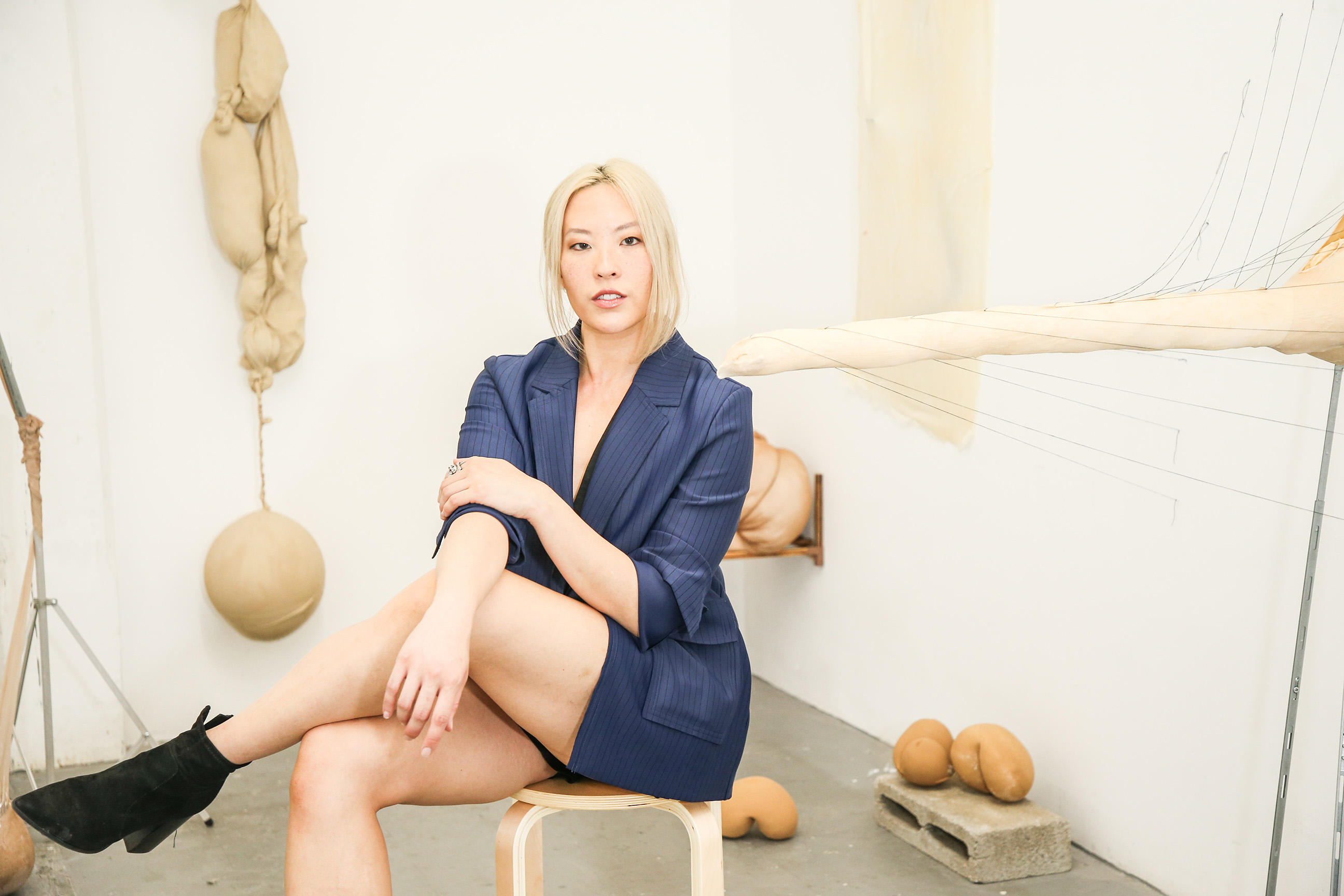
Erika Choe is a conceptual artist working across sculpture, performance, video, and installation. She holds an MFA from School of Visual Arts and a BA with highest honors from University of Virginia. She has received the NARS Foundation Full US Fellowship 2026, James Bernard Haggarty Scholarship Award by NYC Crit Club ‘25, Artist Sculpture Award by Zola ’25, Ceramics Residency by NYCxDESIGN Festival ‘24, and the Ruth Caplin Dance Award for Artistic Excellence ’15. Erika performed at renowned venues like The Shed NY, Brooklyn Academy of Music (BAM), The Fridge Art Gallery NY, and Schrittmaacher Festival in Germany, performing for international choreographers like Akram Khan, Alejandro Cerrudo, and Yin Yue.
I’m feeling accomplished and nourished, I’m also feeling tired and ready for a good break this summer!
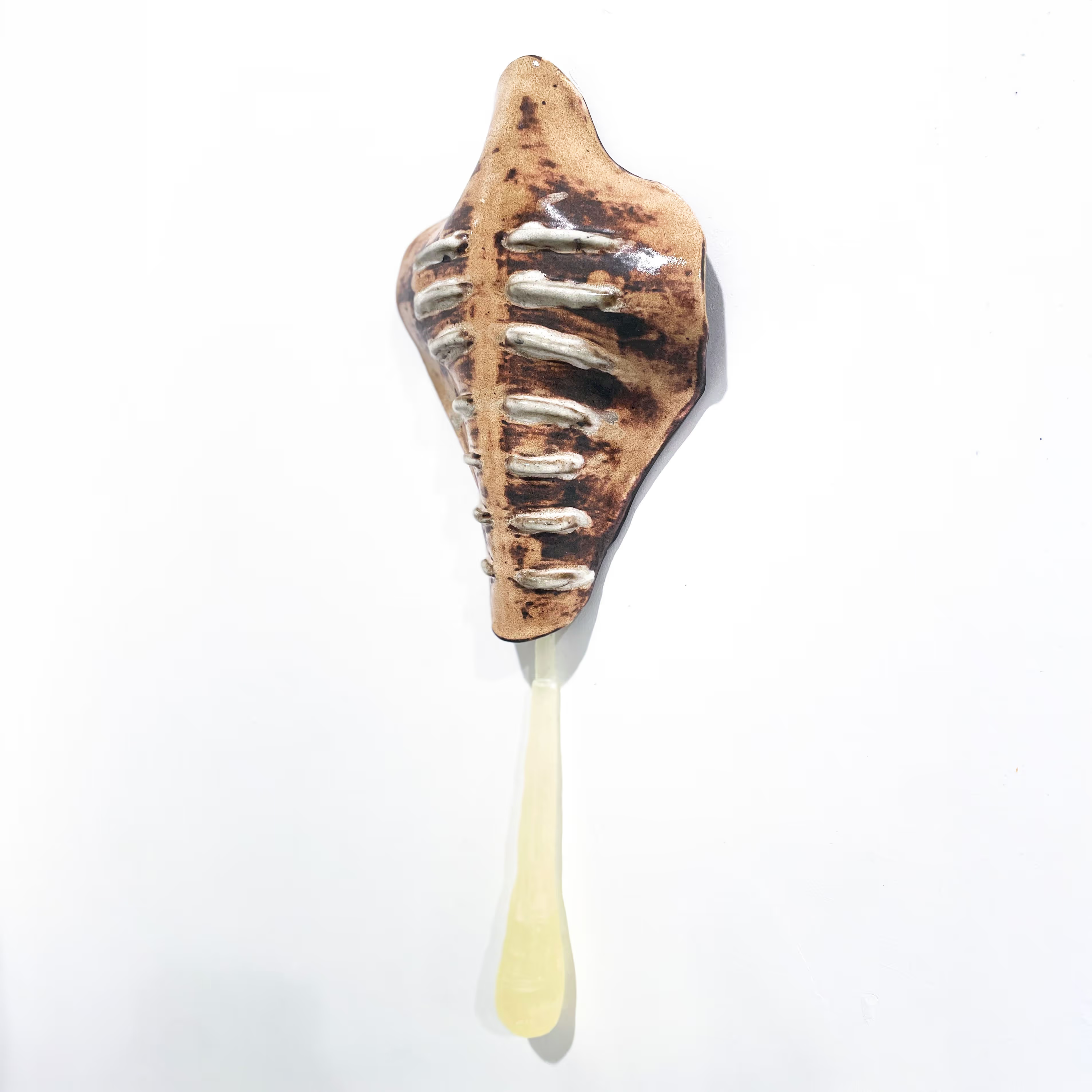
I’m a Brooklyn-based artist working in sculpture, installation, performance, and video. I create abstract portraits of bodies in mid-movement. They take on positionalities of weightedness, gravitational yield, subversion, pain, and grief. My work is a reconciliation of the human instinct to displace pain and trauma in order to withstand our capitalist systems.
The bodies in my work negotiate with constraint and separation - contained within the vessel bound by skin, and disassembled into batched-out body parts that toe the line between recognizable and indistinguishable. The choreography of flesh and mass in my work communicates a merger of somatic and psychological embodiment of personal and collective trauma.
My sculptures store the implicit memory of my actions on material, the imposition of my body lands as an imprint of a gesture or archive of a performance that is no longer present for the viewer. This directly contrasts my video-based performances that capture the action I undertake itself, bringing focus to the time-based enactment of my body on material. In my videos, my body is the site for confrontation, where in real time, I study the making and unmaking of weight on myself. In my sculptures, I work with materials that have the capacity to reveal the mark of my body – metal, latex, nylon, resin, clay, and plaster. The interplay of these materials amplify permeability, tensile stretch, and pliability of our skin held together by the structures of fascia, tissue, bone, and mass.
I like to start my day in the studio with a coffee or matcha from Yafa, sit in my studio in silence, and take everything in. Often during this time, something will call out to me – maybe materials waiting to be used or a work-in-progress asking for more manipulation. I let my body do the deciding and release my mind from overthinking. After a few hours, I often hit a point where I no longer have perspective on what I am doing, so I pay attention to those moments, give myself a break for food, water, engaging/ connecting with other artists. Then, when I go back into the studio, I do something completely different like work on my computer, read books, sketch, etc. It’s important for me not to overwork a specific piece, a few hours of working on it at a time is enough for me, I believe the work needs space and time to breathe and for my body to respond later on – usually a few days later.
Definitely! I love Louise Bourgeois, Senga Nengudi, Ana Mendieta, Eva Hesse, Kiki Smith, Doris Salcedo. I often go back to texts by Astrida Neimanis, Julia Kristeva, Ursula K. Le Guin’s The Carrier Bag Theory of Fiction, and Donna Haraway’s Cyborg Manifesto.
I was worried about juggling my 2 part-time jobs and making work at the residency, but really surprised myself at how much of my process I was able to hold space for and have the capacity to further nurture into a more refined and clearer practice. I attribute this to my wonderful partner and the encouraging support of all my fellow residency cohort artists.
The many studio visits we are given made this residency stand out – it was through these repeated studio visits that I was able to more clearly and confidently talk about my work without much preparation, and to stay present in conversations with the studio visitors so I can let the conversations marinate. I also really enjoyed how each artist approached ASAP with care and love for one another, there was so much generosity and respect that was demonstrated in the way we showed up for all.
We were very lucky to get access to Makerspace in Brooklyn Army Terminal, and through this membership, I was able to incorporate induction forging and welding into my practice. Manipulating metal became very important to my work during this fellowship, and I’m excited to see where this continues down the road.
I have deep gratitude for NARS and the fellowship I was awarded – to have people believe in and support the work you’re doing is monumental to any artist out there, and I am thankful to have received that this season. I realized that it does not matter how much life pulls you away from your practice, the studio is a sacred place for generosity, connection, exploration, and rebirth. Treating the space with love and care, acknowledging the privilege of having it, and making the most of what you can of the floors, walls, and ceilings. It’s transformative to see a studio space go from empty, to transitioning through many works-in-progress, to ready for the public during Open Studios, to empty again. I think every artist out there needs an opportunity like this.
Have one main goal to focus on during the season. It is always tempting to want to have many goals, but have one clear goal that is absolutely achievable during the 2.5 months you’re there. Your cup will always feel full, and you will leave feeling rejuvenated, energized, and accomplished.