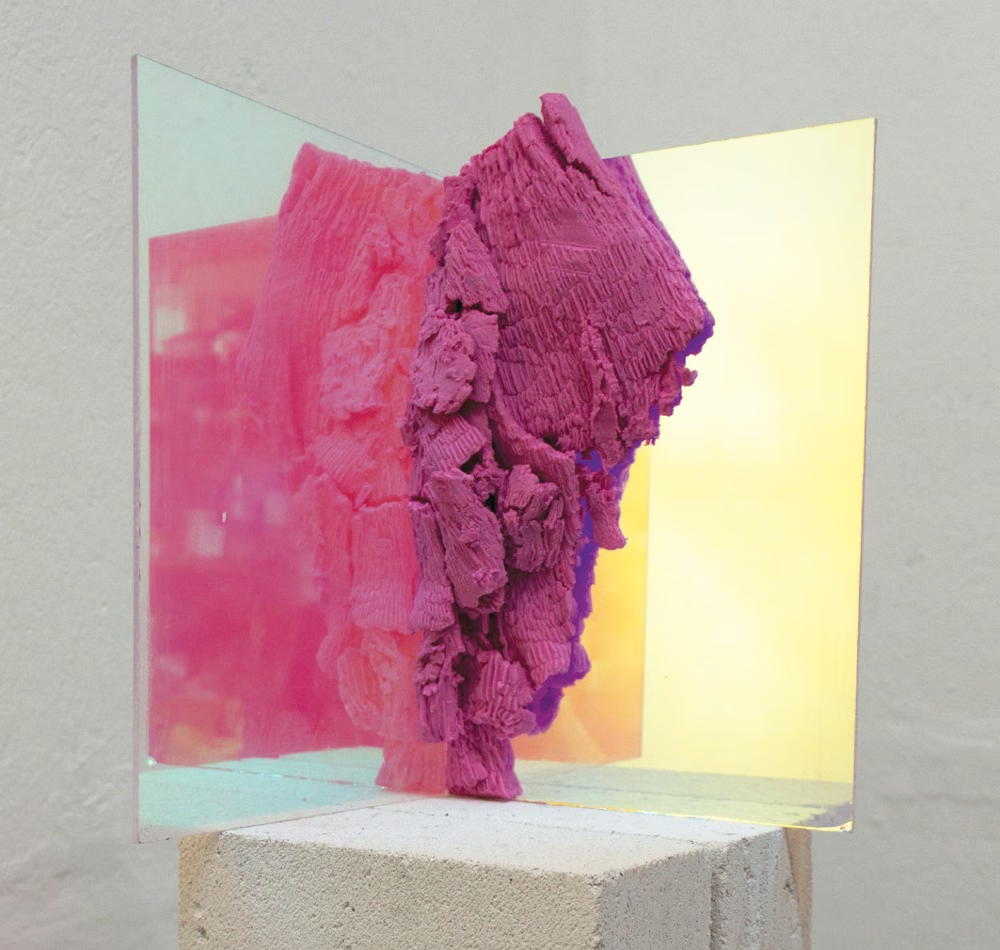
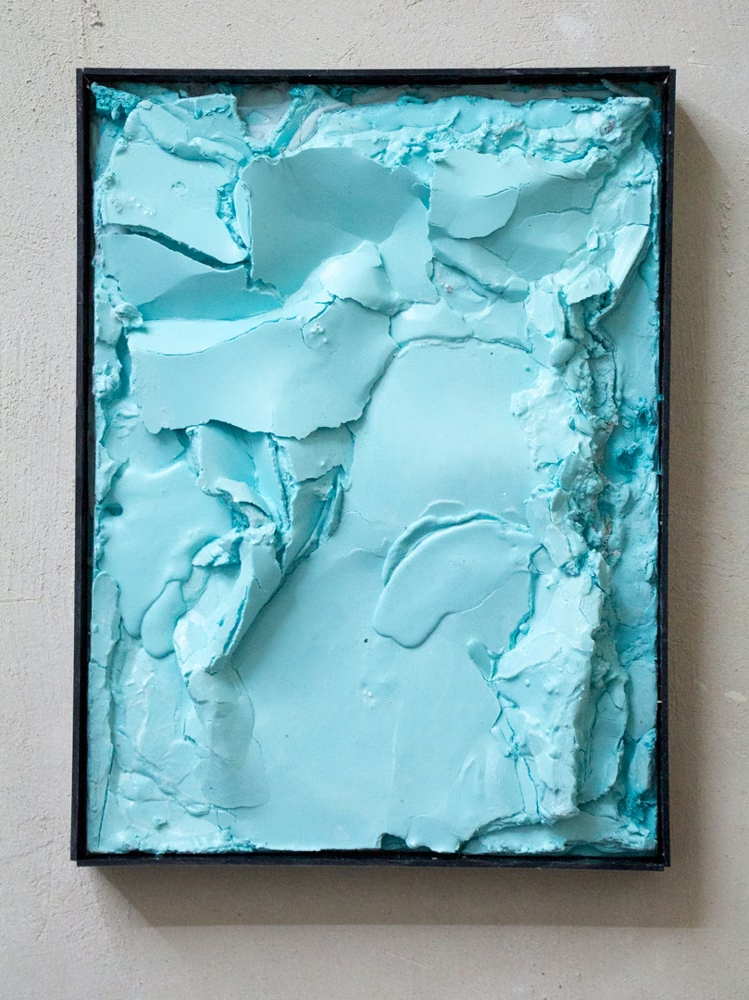
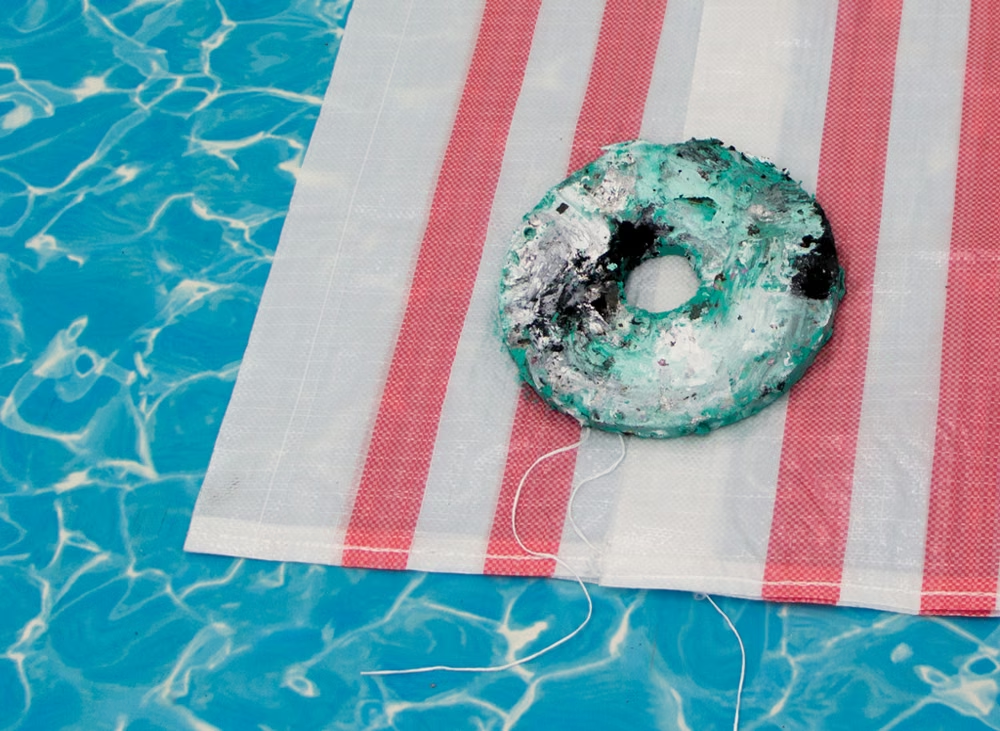
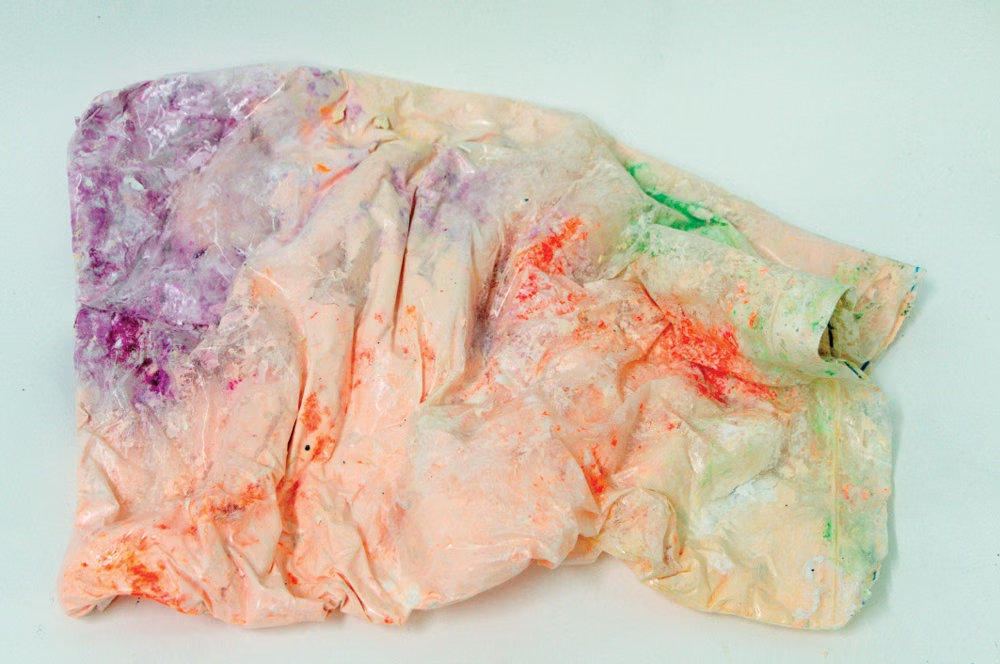
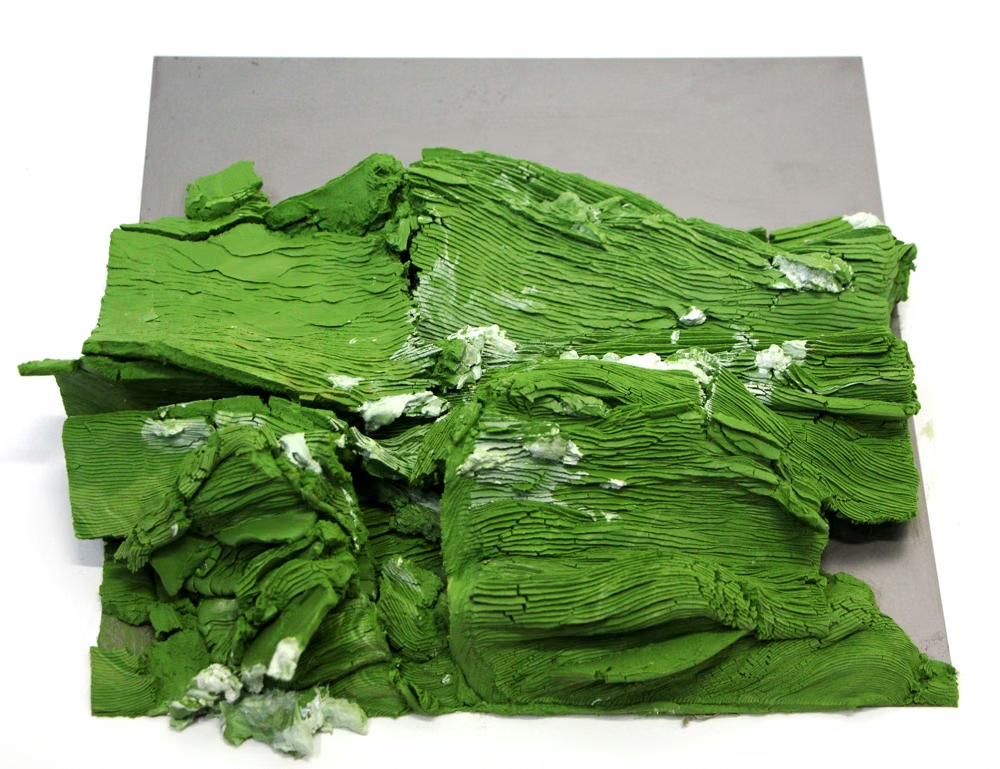
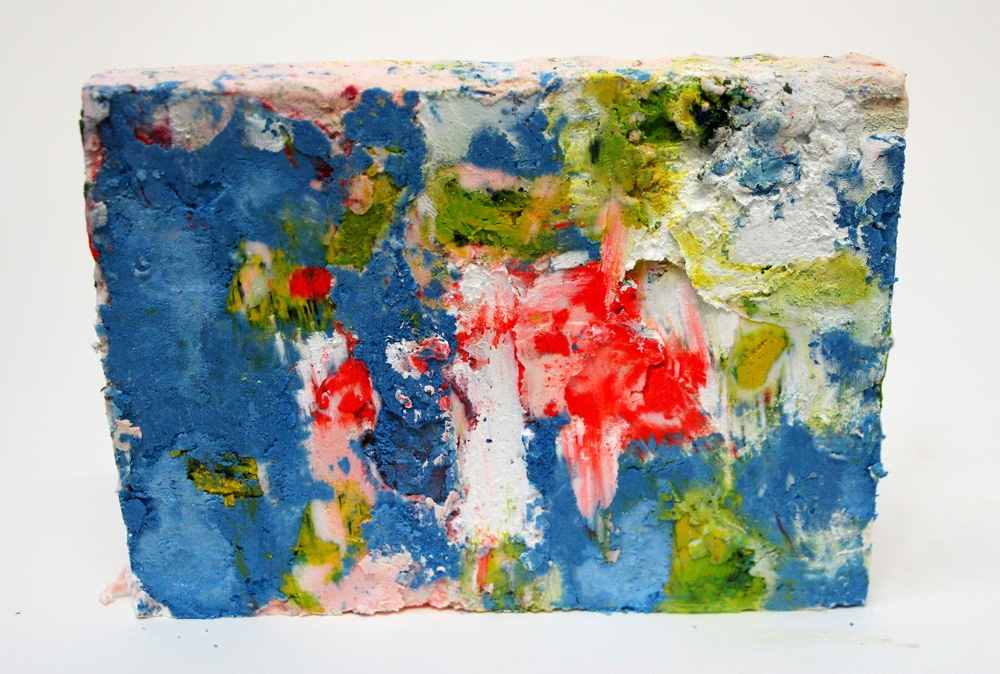
In his work, Tomasz Kobialka investigates the themes of nature and technology through the medium of oil painting. His goal is to propose new understandings of ecology through the use of environmentally contentious materials. Kobialka's paintings often resemble objects that lie somewhere between painting and traditional sculpture. He has appropriated the conceptual tropes of the 70s French Surface/Supports movement and treat painting as concept which he has broken down into the common characteristics of surface, support, medium and texture. Classical and medieval oil paint recipes informs his practice. He has done research into Flemish paint recipes which he has re-created and developed into a vocabulary of his own. This paint forms the basis of his medium. Processes used to create paintings are appropriated from traditional sculpture. The use of moulds, casts and the scraping and pouring of paint onto the surface materials is dominant in his approach. The surface on which the oil paint sits is often the raw industrial materials themselves (concrete, plastics, aluminum). The political position of these materials as environmentally contentious is of major importance to his work. Kobialka's goal is to use present material conditions to inform new modes of ecological existence. Various theorists inform his research practice but he is especially interested in the ideas of philosopher Timothy Morton. Morton has developed the concept of Dark Ecology which purposes a rethinking of an Ecology without Nature. Morton speculates of a human coexistence with the toxic consequences of technological progress and proposes aesthetic experimentation as a strategy to achieving this goal. By mixing traditional practices with environmentally degrading materials, Kobialka's work gestures towards Morton's utopia of an Ecology without Nature.