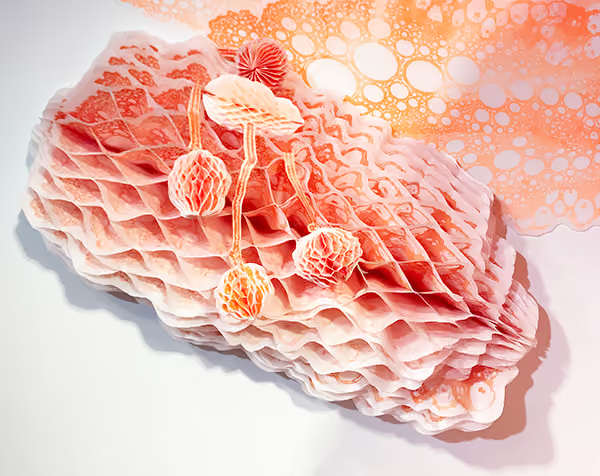
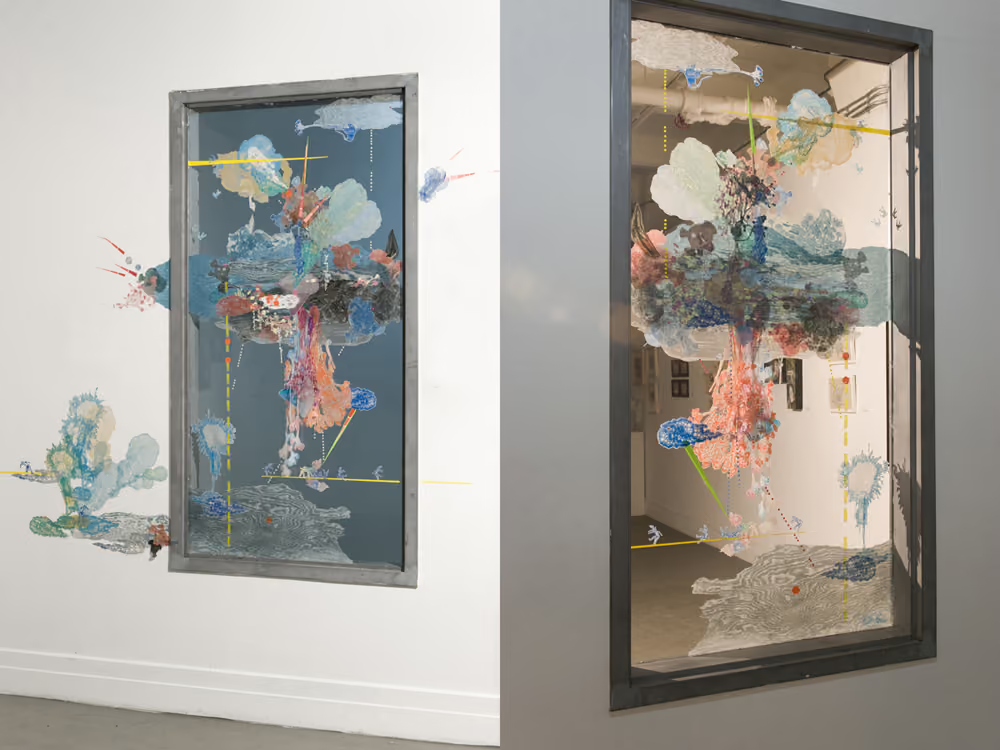
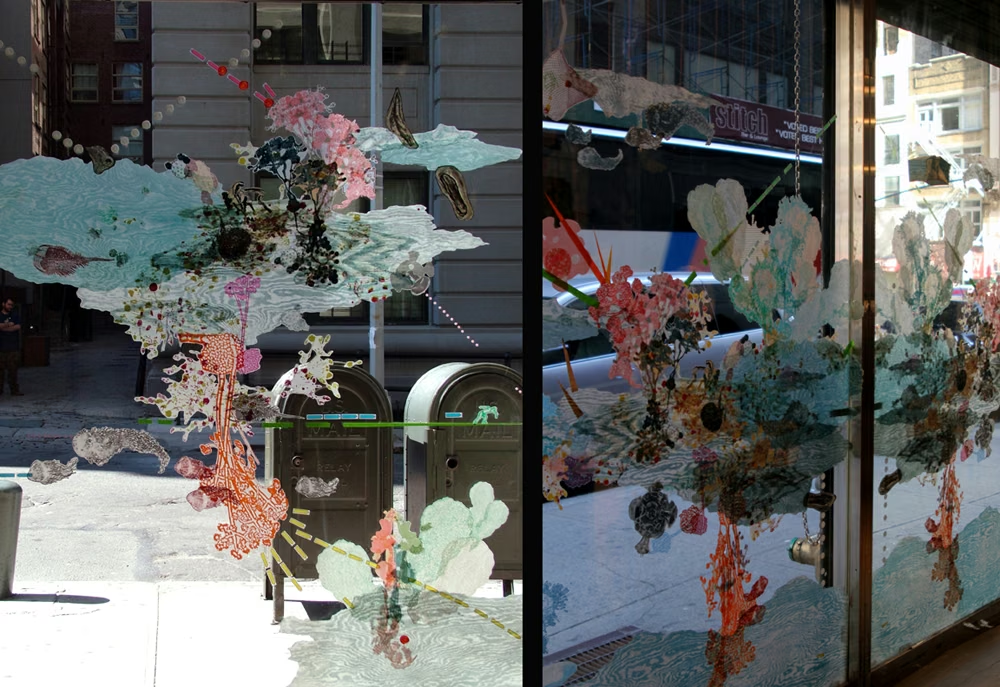


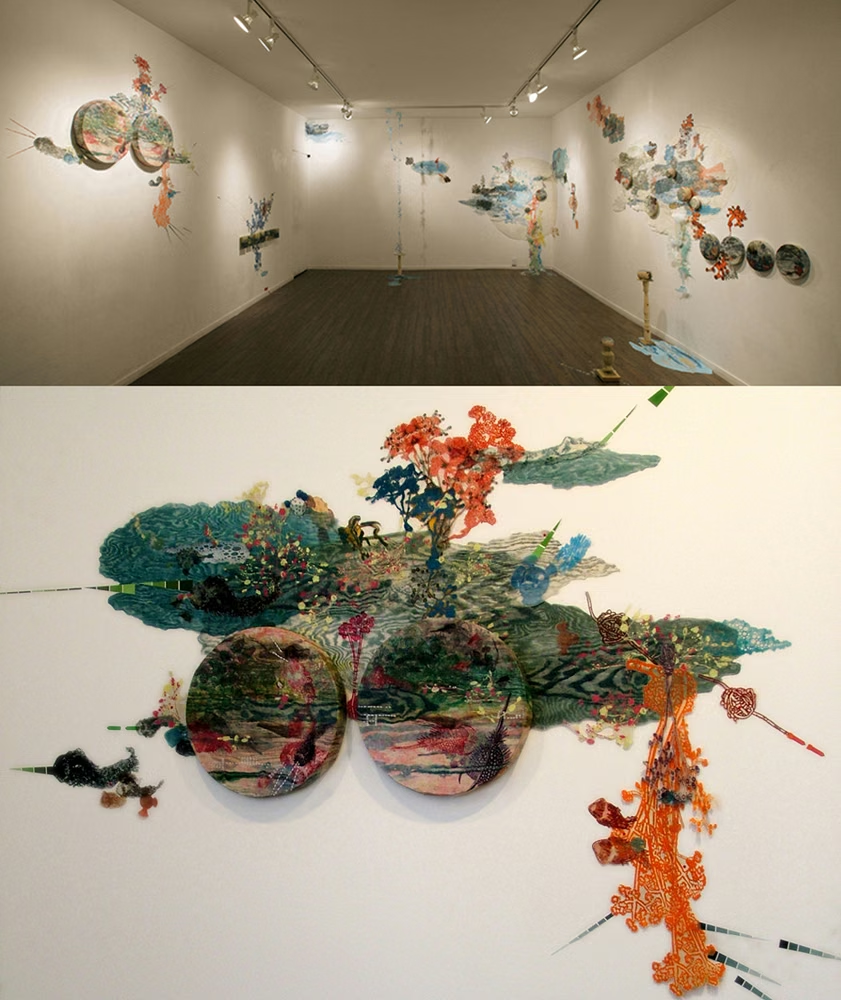
Created by traditional printmaking techniques with unique luminosity through hand-waxing, Tai Hwa Goh's images are installed on various architectural elements. The image gets obstructed and buried under layers of delicately waxed papers transmitting the echo of the image. The process of layering images intends to reflect the accumulation of memory and experiences, and thus represents impenetrability and vulnerability of human body, but, at the same time, recoverability and powerfulness of selfness.
Through this presentation, Goh becomes the extension of nature and nature becomes the extension of his body. Goh's images evolve from biological forms to landscape, describing the interaction between the inner and outer mass of human body. In the process of folding, cutting, flipping and overlapping printed materials, images are gradually transformed away from identifiable objects, taking on a naturalistic guise of their own, growing into space, posing questions about our accepted definition of printed works of art, as well as the idea of passage.